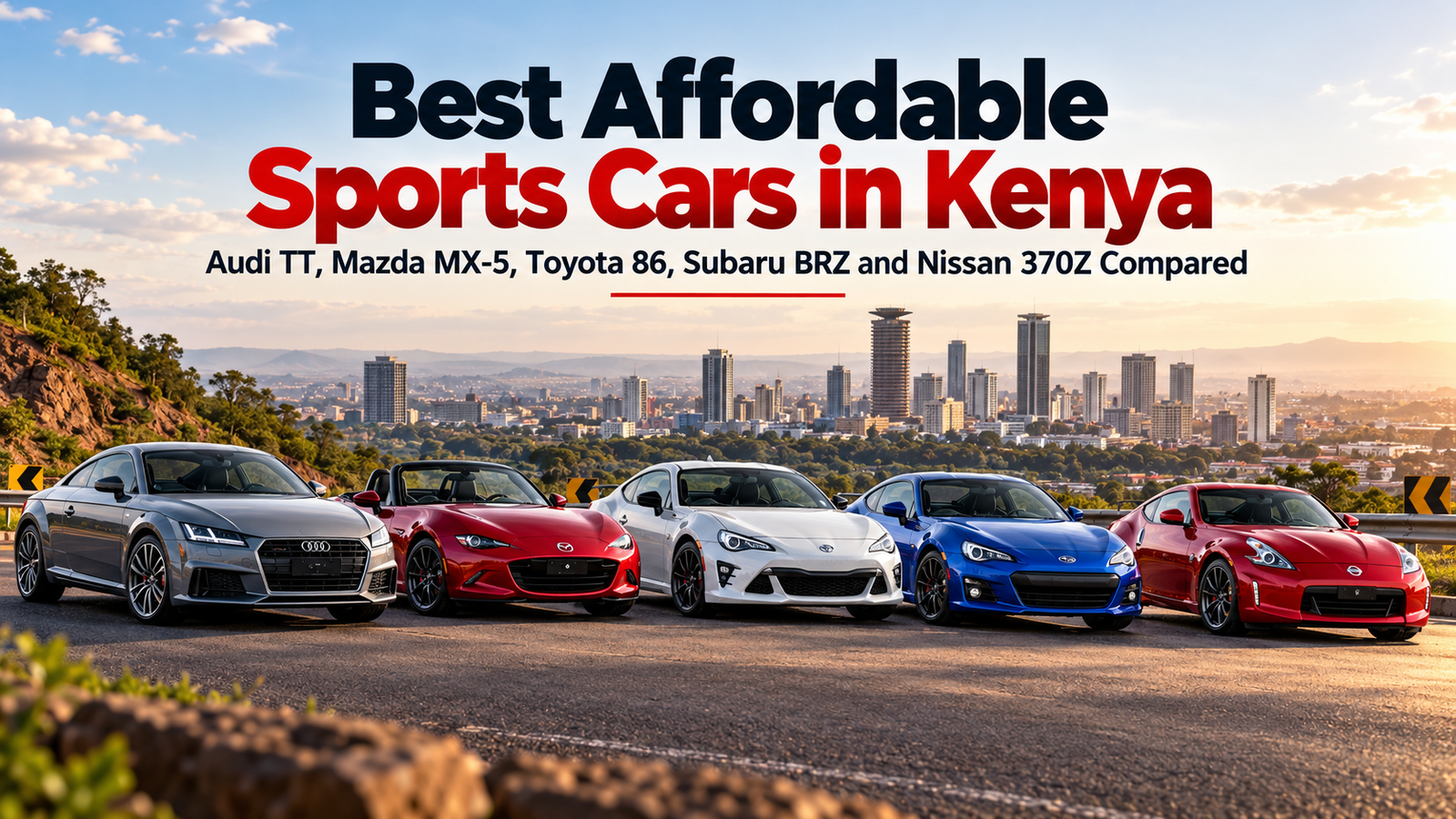
Sports-car ownership in Kenya is often associated with expensive Porsche, BMW M, Mercedes-AMG and high-performance Audi models. However, you do not necessarily need supercar money to own something genuinely exciting.
The Audi TT, Mazda MX-5, Toyota 86, Subaru BRZ and Nissan 370Z all offer real sports-car character at prices that, while not cheap, are considerably more attainable than those of premium performance cars.
They also approach the idea of a sports car very differently.
The Audi TT combines performance with a premium interior and everyday refinement. The Mazda MX-5 focuses on low weight, simplicity and open-top driving. The Toyota 86 and Subaru BRZ are closely related rear-wheel-drive coupes designed around balance rather than outright speed. The Nissan 370Z uses a much larger V6 engine and delivers the strongest straight-line performance of the group.
But buying a sports car in Kenya involves more than comparing horsepower.
You must also consider Nairobi traffic, fuel consumption, speed bumps, road quality, tyre prices, specialist mechanics, spare parts, insurance, resale value and the possibility that a used example has been modified, raced or drifted.
This guide compares all five cars from a Kenyan buyer’s perspective and answers the most important question:
Which affordable sports car makes the most sense in Kenya?
This comparison focuses mainly on 2019 and 2020 examples.
That matters because Kenya’s normal used-vehicle import framework limits imported vehicles to no more than eight years from manufacture or first registration and requires pre-shipment roadworthiness inspection. On that basis, a vehicle being imported during 2026 will generally need to have been first registered in 2019 or later, although buyers should verify the exact eligibility of a specific vehicle before paying for it. KRA
Older examples that are already registered in Kenya may still appear on the local market. They can be cheaper, but their ownership, accident and modification histories require particularly careful investigation.
The article primarily compares:
Third-generation Audi TT models
Fourth-generation Mazda MX-5 ND models
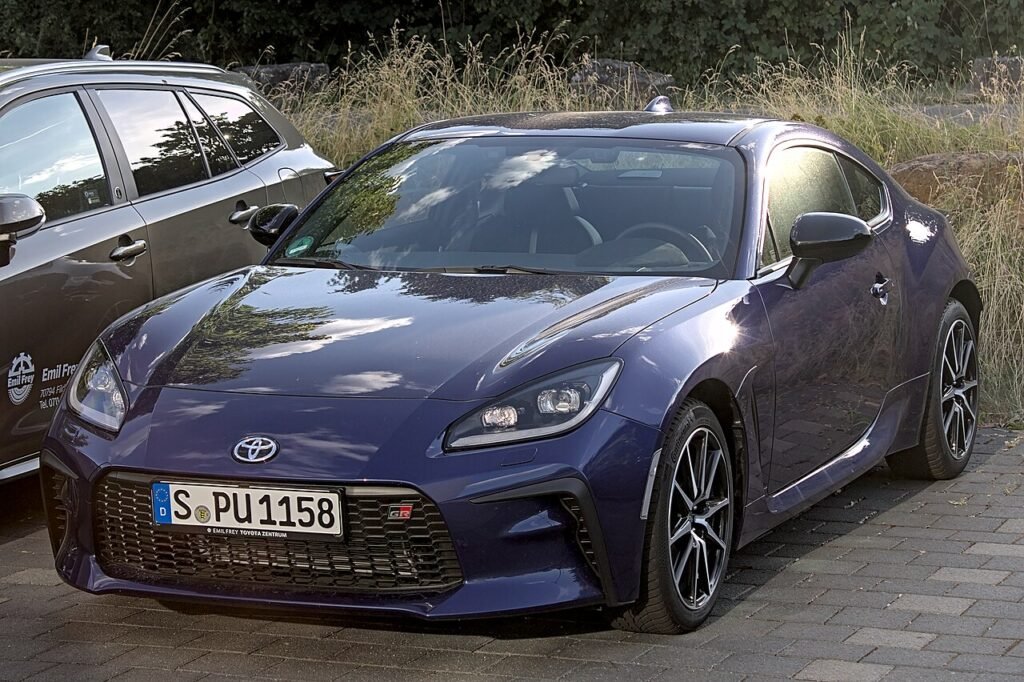
Late first-generation Toyota 86 models
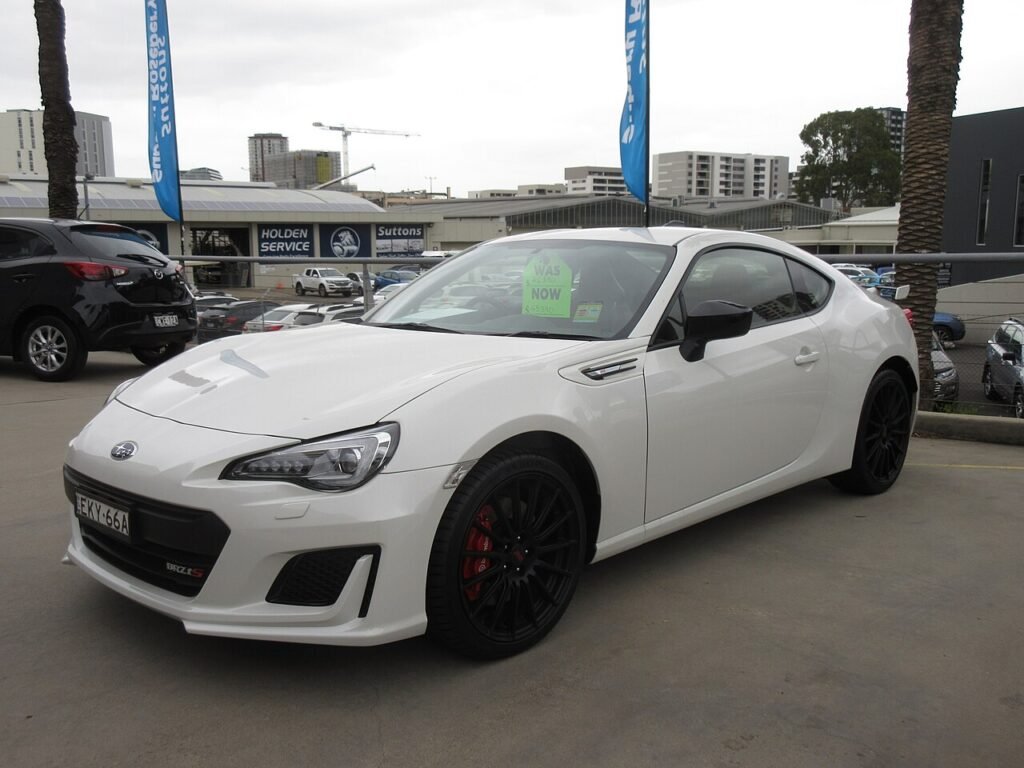
Late first-generation Subaru BRZ models
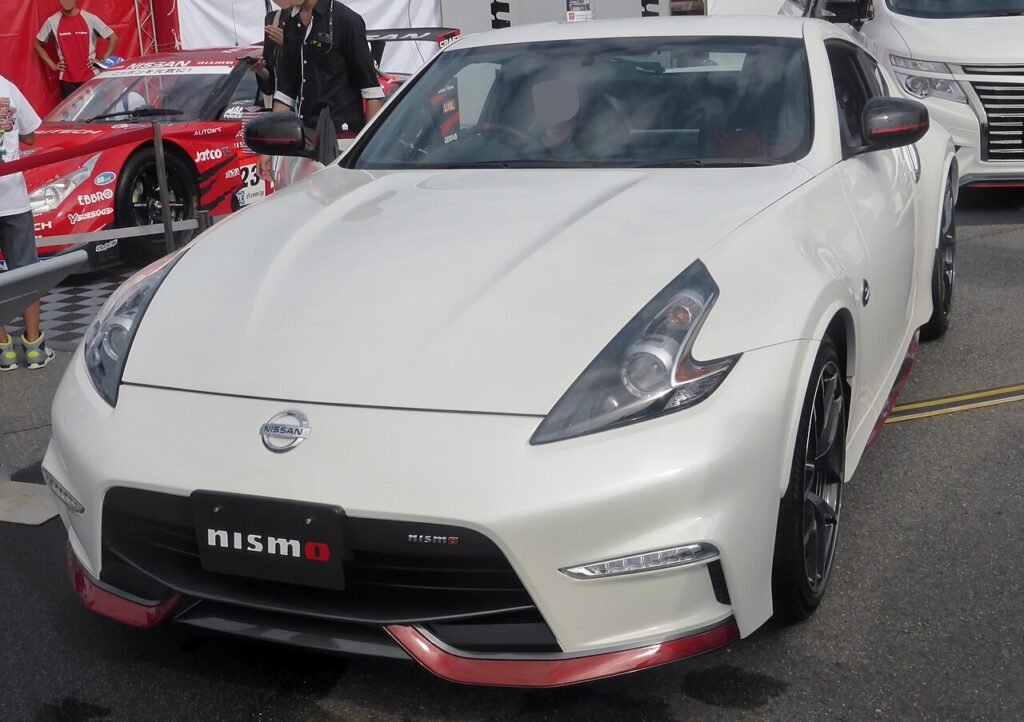
Late Nissan 370Z models
The newer Toyota GR86 and second-generation Subaru BRZ use larger 2.4-litre engines and generally sit in a higher price bracket. Toyota lists the newer GR86 with a 2.387-litre boxer engine, while the original 86 launched with a 2.0-litre engine. Toyota Global
Quick Comparison: Affordable Sports Cars in Kenya
Model
Typical Engine
Drive
Seats
Approximate Power
Main Strength
Audi TT
2.0L turbo petrol
FWD or AWD
2+2
197–245 PS
Premium daily performance
Mazda MX-5
1.5L or 2.0L petrol
RWD
2
132–184 PS
Lightweight driving enjoyment
Toyota 86
2.0L boxer petrol
RWD
2+2
Around 200 hp
Best all-round enthusiast coupe
Subaru BRZ
2.0L boxer petrol
RWD
2+2
Around 200–205 hp
Rarity and handling
Nissan 370Z
3.7L V6 petrol
RWD
2
332–350 hp
Power and engine character
Audi’s 40 TFSI TT produces 197 PS, while the 45 TFSI reaches 245 PS depending on specification. The 2019 MX-5 was available with 132 PS and 184 PS engines. The late first-generation BRZ produced approximately 200–205 hp, and the standard 370Z produced 332 hp, rising to 350 hp in NISMO form. audi.com
These figures are not perfectly comparable because manufacturers use different measurement standards and market specifications. They do, however, illustrate the fundamental difference between the cars: the 370Z and stronger TT variants prioritise acceleration, while the MX-5, 86 and BRZ emphasise balance and driver involvement.
What Makes a Good Sports Car for Kenya?
A car that is excellent on a European test track may not automatically be the right sports car for a Kenyan owner.
Ground Clearance
Every car in this comparison is low.
That affects how you approach:
Large speed bumps
Potholes
Unpaved parking areas
Rough estate roads
Steep basement entrances
Raised gate tracks
Broken road shoulders
A low front bumper can be damaged even when the main underbody clears an obstacle. Aftermarket splitters, lowered suspension and oversized exhaust systems make the situation worse.
You therefore need to inspect the actual car, not just rely on a brochure figure. A modified Toyota 86 on coilovers may be considerably lower than a standard one, while an Audi TT fitted with large wheels and low-profile tyres may be more vulnerable to pothole damage than its ride height initially suggests.
Fuel Consumption
Sports-car fuel consumption is heavily influenced by how the car is driven.
The same Toyota 86 that returns reasonable economy during steady highway driving can consume considerably more in Nairobi traffic or when regularly driven at high engine speeds.
The 370Z is in a different category. Its 3.7-litre engine provides much stronger performance but will use substantially more fuel than a 1.5-litre MX-5.
Parts and Mechanics
Routine service items may be available locally, but sports-car-specific parts can be expensive.
A filter or spark plug is one thing. A model-specific headlight, limited-slip differential, roadster roof mechanism, S tronic component, bumper or suspension arm is another.
Before buying, find out who can maintain the exact car and engine—not merely the brand.
Tyres and Brakes
Sports cars rely heavily on their tyres.
Cheap, mismatched or worn tyres can make a rear-wheel-drive car dangerous, particularly in the wet. Performance brake discs, callipers and pads can also cost far more than components for a normal saloon.
The purchase price should therefore not consume your entire budget. You need money left for immediate preventive maintenance, tyres, fluids and any hidden defects discovered after purchase.
Insurance
Get a comprehensive-insurance quotation before committing to the car.
You should also disclose significant modifications. The Insurance Regulatory Authority’s model private-car policy requires owners to notify insurers of important changes affecting the vehicle and warns that underinsurance can reduce the amount recoverable after a loss. Insurance Regulatory Authority
This is particularly relevant when a car has expensive aftermarket wheels, body kits, forced-induction conversions or audio equipment.
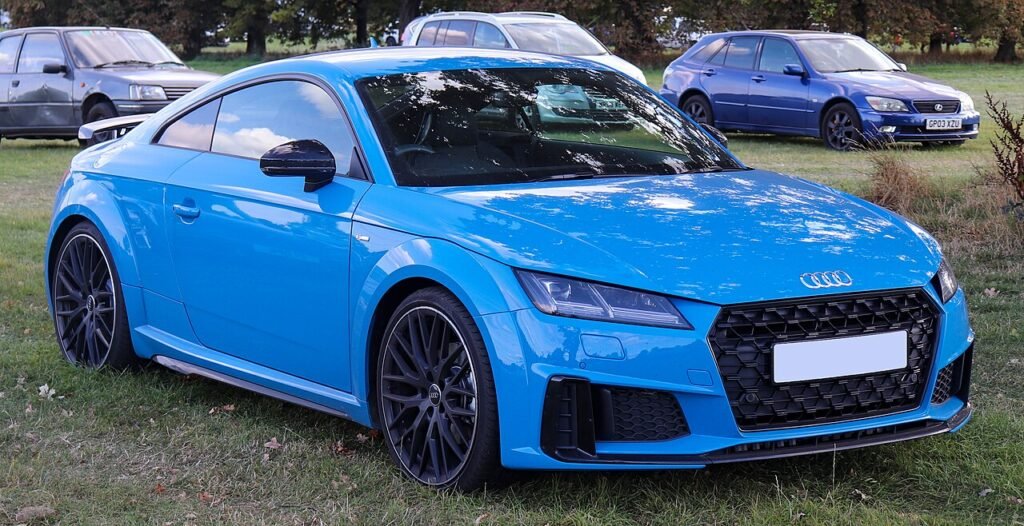
1. Audi TT: Best for Premium Style and Everyday Performance
The Audi TT is the least traditional sports car in this comparison.
Unlike the rear-wheel-drive MX-5, 86, BRZ and 370Z, ordinary TT variants may be front-wheel drive, while selected versions use Audi’s quattro all-wheel-drive system.
What the TT offers is a combination of performance, design and everyday comfort.
A third-generation TT feels more premium than the Japanese cars in this comparison. Its cabin design, materials, digital instrumentation and overall refinement make it easier to use as an everyday vehicle.
Audi TT Engine and Performance
A common third-generation Audi TT uses a 2.0-litre turbocharged four-cylinder engine.
The TT 40 TFSI produces 197 PS and 320 Nm, with Audi quoting 0–100 km/h in 6.6 seconds for the coupe. The stronger 45 TFSI produces 245 PS and 370 Nm. Audi lists the 45 TFSI quattro Roadster at 5.4 seconds from 0–100 km/h, although performance varies between coupe, roadster, front-wheel-drive and quattro configurations. audi.com
This turbocharged torque makes the TT feel effortless in normal driving.
You do not need to rev the engine as hard as you would in an MX-5, 86 or BRZ to access useful acceleration. That is an advantage when overtaking or joining a highway.
Quattro versions also provide strong traction, although all-wheel drive should not be treated as a substitute for good tyres or sensible wet-weather driving.
Audi TT Practicality
The TT coupe is a 2+2 rather than a true four-seater.
The rear seats are better regarded as additional luggage space or occasional seats for very small passengers. The front seats, however, are comfortable, and the hatchback opening makes the boot more usable than the styling suggests.
Audi lists approximately 305 litres of luggage capacity behind the rear seats in the TT coupe, expanding when the rear seatbacks are folded. audi.com
This gives the TT an important advantage over the Mazda MX-5 and Nissan 370Z if you intend to use the car regularly.
Audi TT Fuel Economy
The 40 TFSI has official combined WLTP consumption of approximately 6.6–6.9 litres per 100 km, equivalent to roughly 14.5–15.2 km/L under the test cycle.
A stronger quattro variant consumes more. Audi lists the 45 TFSI quattro Roadster at approximately 8.1–8.4 litres per 100 km, or roughly 11.9–12.3 km/L. Nairobi traffic and aggressive driving will reduce those figures. audi.com
Audi TT Maintenance in Kenya
The TT needs a workshop familiar with Volkswagen Group engines, electronics and dual-clutch transmissions.
Before buying, confirm the history of:
Engine-oil servicing
S tronic transmission servicing
Cooling-system repairs
Spark-plug replacement
Quattro or AWD-clutch servicing where fitted
Brake-fluid changes
Diagnostic faults
Audi’s published 2019 maintenance schedule lists periodic S tronic fluid changes and, on relevant all-wheel-drive models, AWD-clutch fluid replacement every three years. Exact requirements depend on the model, transmission, market and VIN, so the car’s correct maintenance schedule should be checked rather than guessed. NHTSA
A cheap TT with no transmission or drivetrain service history can become a false economy.
Audi TT Price in Kenya
Current asking and landed-cost indications vary widely.
Recent Kenyan listings include 2018 examples from approximately KSh 3.1 million, with higher-specification roadsters and quattro versions advertised around KSh 4 million to KSh 4.5 million. A 2019 import example has been estimated at approximately KSh 3.9 million landed, while another registered 2019 listing was priced above KSh 5.6 million. Jiji Kenya
A sensible working range for a late third-generation TT is therefore approximately:
KSh 3.3 million to KSh 5.6 million, depending on year, trim, drivetrain, body style, mileage and registration status.
Audi TT Advantages
Most premium cabin in the comparison
Strong turbocharged performance
Useful hatchback-style luggage area
Comfortable enough for daily use
Quattro available on selected versions
Good automatic-transmission experience
Audi TT Disadvantages
Requires specialised maintenance
More complicated than the naturally aspirated Japanese cars
Rear seats have limited practical value
Quattro and S tronic servicing add ownership obligations
Electronic and drivetrain faults can be expensive
Audi TT Verdict
The Audi TT is the best choice for someone who wants a sports car that still feels polished, modern and comfortable in everyday use.
It is not the most mechanically simple car here, but it is arguably the easiest to live with when properly maintained.
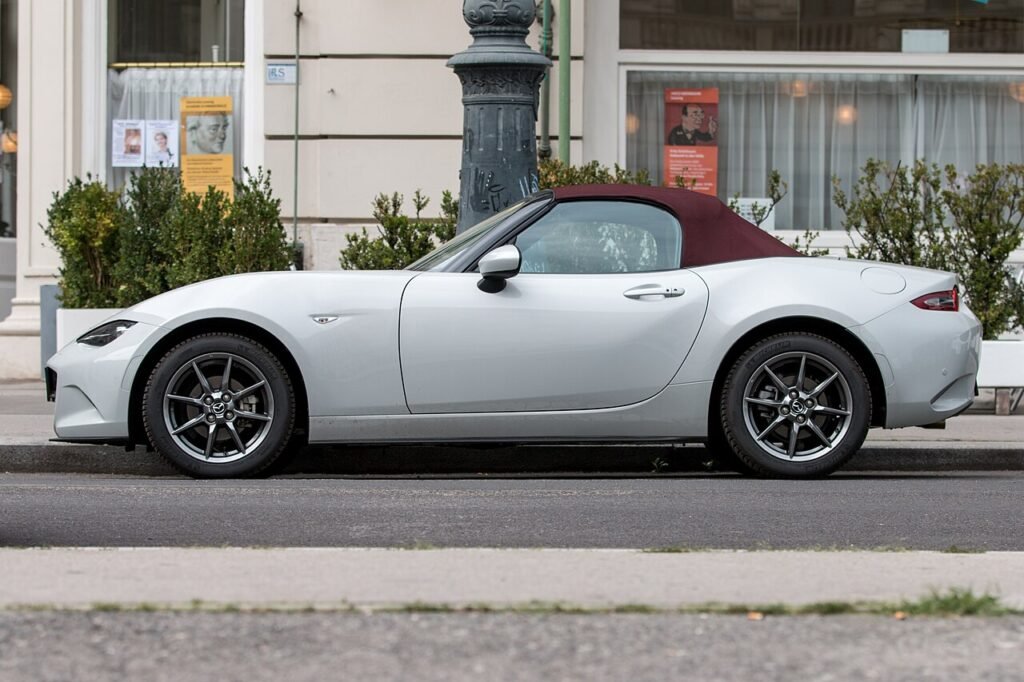
2. Mazda MX-5: Best for Pure Driving Enjoyment
The Mazda MX-5 follows a very different philosophy.
Instead of using a large engine or complicated drivetrain, Mazda keeps the car small, light and simple.
It has two seats, rear-wheel drive, a naturally aspirated petrol engine and either a soft top or retractable RF roof. The result is a car that can feel exciting without requiring extreme speed.
Mazda MX-5 Engine and Performance
The 2019 MX-5 was available with two main engine choices in many right-hand-drive markets:
1.5-litre Skyactiv-G with 132 PS and 152 Nm
2.0-litre Skyactiv-G with 184 PS and 205 Nm
The upgraded 2.0-litre engine revs to 7,500 rpm, and Mazda quoted 0–62 mph in approximately 6.5 seconds for the soft-top version. The 1.5-litre is slower, but its lower weight and willingness to rev preserve much of the car’s appeal. Mazda Austria Press
The MX-5 is not defined by straight-line speed.
Its strengths are:
Low weight
Responsive steering
Predictable rear-wheel-drive balance
Short manual-gearbox movement
Compact dimensions
The ability to enjoy the car without driving at extreme speeds
That makes it one of the most accessible sports cars for an owner who wants to improve as a driver.
Soft Top or RF?
The soft top delivers the purest MX-5 experience.
It is lighter, mechanically simple and can be opened or closed quickly. The RF uses a powered retractable roof structure, providing a more coupe-like appearance and better perceived security when parked.
The choice depends on your priorities.
Choose the soft top for simplicity and the traditional roadster experience. Choose the RF if you want a more enclosed cabin, stronger visual presence and greater confidence when leaving the car parked.
Mazda MX-5 Practicality in Kenya
The MX-5 is strictly a two-seater.
Mazda lists a cargo capacity of approximately 130 litres for the roadster, so this is not the car for airport runs with several large suitcases. shop.mazda.co.uk
It also has a low seating position and limited cabin space. Taller drivers should sit in the exact car before buying because roof type, seat design and body proportions can affect comfort.
The soft top needs attention in Kenya’s combination of strong sun, dust and heavy rain. Mazda’s own manual warns that blocked drain filters can allow water into the vehicle and recommends cleaning the drain filter at least once a year. Mazda Owners Manual
Mazda MX-5 Fuel Economy
This is the most economical car in the comparison under comparable test conditions.
Mazda published consumption of approximately:
6.3 litres per 100 km for the 1.5-litre
6.9–7.2 litres per 100 km for the 2.0-litre
That converts to roughly 13.9–15.9 km/L, depending on engine and specification. Mazda Press
Real results in Nairobi will be lower, but the MX-5 should still be considerably easier to fuel than the 370Z.
What to Check Before Buying an MX-5
Pay particular attention to:
Soft-top fabric and stitching
Roof drains and evidence of water entry
RF roof operation where applicable
Rust or corrosion underneath
Accident repairs
Gearbox operation
Differential noise
Suspension alignment
Wheel damage
Underbody scraping
A car that has been used for track days may still be a good purchase, but only if it has been maintained properly and priced accordingly.
Mazda MX-5 Price in Kenya
A current 2018 MX-5 RF listing is around KSh 3 million. Kenyan import-market estimates for 2019 roadsters place import costs at approximately KSh 2.4 million to KSh 2.6 million and local asking prices around KSh 3.2 million to KSh 3.5 million, depending on specification. Jiji Kenya
For a 2019-era MX-5, a reasonable indicative range is:
KSh 2.4 million to KSh 3.5 million.
The 1.5-litre Japanese-market Roadster may be cheaper than a well-specified 2.0-litre UK-market RF.
Mazda MX-5 Advantages
Best steering and lightweight feel
Excellent manual transmission
Lowest likely fuel cost
Naturally aspirated mechanical simplicity
Open-top driving
Strong enthusiast reputation
Mazda MX-5 Disadvantages
Only two seats
Very small boot
Low ground clearance
Soft-top security and maintenance concerns
Model-specific body and roof parts may need importing
Cabin can feel tight for taller occupants
Mazda MX-5 Verdict
The MX-5 is the best driver’s car in this comparison for someone who values involvement more than horsepower.
It is less practical than the Audi TT, Toyota 86 or Subaru BRZ, but it arguably delivers the clearest and most enjoyable sports-car experience.
3. Toyota 86: Best First Sports Car in Kenya
The Toyota 86 is one of the easiest cars in this comparison to recommend.
It offers a traditional sports-car layout—front engine, rear-wheel drive, a low centre of gravity and a choice of manual or automatic transmissions—without the fuel costs of the Nissan 370Z or complexity of the Audi TT.
It is also more practical than the Mazda MX-5.
Toyota 86 Engine and Performance
The late first-generation Toyota 86 uses a 1,998cc naturally aspirated boxer engine jointly developed with Subaru.
Toyota’s UK technical specifications list approximately 197 bhp and 205 Nm, with:
Six-speed manual transmission
Six-speed automatic transmission
0–62 mph in 7.6 seconds for the manual
0–62 mph in 8.2 seconds for the automatic
The 86 is not exceptionally fast in a straight line, but it was not designed to win drag races. Its strength is its chassis, low centre of gravity and predictable handling. Toyota Media Site
The engine needs revs to produce its best performance. Drivers used to turbocharged cars may initially find the low-rpm response modest.
Toyota 86 Practicality
The 86 has a 2+2 seating layout.
The rear seats are very small, but they are still useful for bags, shopping or occasional short trips with small passengers. They also make the 86 more flexible than an MX-5 or 370Z.
The boot and folding rear seat allow the car to carry more luggage than its coupe shape suggests.
For a single person or couple, the 86 can realistically function as an only car—provided the roads used regularly are suitable for a low sports coupe.
Toyota 86 Fuel Economy
Toyota’s 2020 UK figures show official combined WLTP economy of approximately 33 mpg for both transmissions, equivalent to around 11.6–11.8 km/L. Toyota Media Site
You may achieve reasonable economy during steady highway driving, but spirited driving and stop-start traffic will reduce it.
Toyota 86 Maintenance in Kenya
Although it wears a Toyota badge, the engine is a Subaru-designed boxer unit.
That means the car should be maintained by someone who understands:
Boxer-engine layout
Correct oil specification
Spark-plug access
Cooling-system condition
Differential servicing
Manual or automatic transmission servicing
Clutch condition
Oil leaks and oil level monitoring
Routine parts are manageable, and the car benefits from a sizeable international aftermarket. However, body panels, lights, limited-slip-differential components and performance suspension parts can still be expensive.
The Modification Problem
The biggest risk when buying a used Toyota 86 in Kenya may not be the original engineering.
It may be the previous owner.
Many cars have been fitted with:
Lowering springs or coilovers
Aftermarket wheels
Loud exhausts
Air intakes
ECU tunes
Turbocharger or supercharger kits
Body kits
Drift modifications
Modifications are not automatically bad. Professionally installed parts with supporting invoices can improve the car.
The concern is undocumented work, unsuitable tuning, poor wiring, incorrect wheel offsets or a car that has repeatedly been drifted and repaired.
For a first-time sports-car buyer, a largely standard example is usually the safer purchase.
Older-Car Recall Check
Certain 2013 US-market Scion FR-S vehicles were recalled for potentially defective engine valve springs. This does not mean every Toyota 86 has the problem, but buyers considering an early locally registered car should verify its VIN and recall history rather than assuming all campaigns were completed. Tech Info
Toyota 86 Price in Kenya
Current Kenyan listings show 2019 Toyota 86 examples around KSh 3.2 million to KSh 3.25 million. Wider market estimates place higher-grade or locally retailed examples above KSh 4 million, particularly when mileage, condition and specification are exceptional. Car Imports Kenya
A realistic current range is approximately:
KSh 3.2 million to KSh 4.5 million.
Modified cars should not automatically command a premium. The quality, reversibility and documentation of the modifications matter.
Toyota 86 Advantages
Excellent rear-wheel-drive chassis
More practical than the MX-5 and 370Z
Strong modification and enthusiast community
Reasonable fuel consumption for a sports coupe
Manual and automatic options
Toyota badge may support buyer confidence and resale
Toyota 86 Disadvantages
Limited low-rpm torque
Rear seats are very small
Low front bumper and underbody
Many used examples have been modified
Boxer-engine servicing requires the right knowledge
Not as fast as the TT or 370Z
Toyota 86 Verdict
The Toyota 86 is the best first sports car in this comparison.
It is fast enough to be enjoyable, slow enough to explore responsibly, practical enough for regular use and mechanically simpler than the TT.
For most Kenyan buyers seeking one car that can handle commuting and weekend enjoyment, the 86 offers the strongest overall balance.
4. Subaru BRZ: Best for the Enthusiast Who Wants Something Rarer
The Subaru BRZ is the Toyota 86’s closest relative.
The two cars were jointly developed, share their core platform and use the same basic boxer-engine and rear-wheel-drive formula.
However, they are not completely interchangeable.
Differences can include:
Suspension tuning
Spring and damper settings
Front and rear styling
Interior trim
Equipment
Special editions
Brake packages
Model-year updates
Toyota says the newer GR86 and BRZ share a common vehicle base while each brand sought a distinct driving feel. The same broad philosophy applied to their first-generation predecessors. Toyota Global
Subaru BRZ Performance
A 2020 first-generation BRZ uses a 2.0-litre boxer engine.
Subaru listed:
205 hp with the six-speed manual
200 hp with the six-speed automatic
Torsen limited-slip differential
2+2 seating
Fold-down rear seatback
Higher trims and performance packages could include Brembo brakes, Sachs dampers and larger wheels. media.subaru.com
In normal road driving, the difference between a comparable Toyota 86 and BRZ is much less important than the condition of the individual cars.
A clean, standard BRZ with complete service history is a better purchase than a neglected 86 simply because the Toyota badge is more familiar.
BRZ Ownership in Kenya
Kenya already has a large Subaru enthusiast and specialist community, which is useful.
However, the BRZ is not simply a rear-wheel-drive Impreza. Model-specific body, suspension, differential and interior components may still require specialist sourcing.
The BRZ’s relative rarity can also work both ways.
It makes the car feel more distinctive, but it may reduce the number of buyers when you eventually decide to sell.
Toyota 86 vs Subaru BRZ
Factor
Toyota 86
Subaru BRZ
Mechanical layout
2.0L boxer, RWD
2.0L boxer, RWD
Availability in Kenya
Usually more common
Usually rarer
Parts interchangeability
Many shared components
Many shared components
Body and trim parts
Toyota-specific
Subaru-specific
Resale familiarity
Generally stronger
Smaller enthusiast market
Main reason to choose
Availability and value
Rarity and preference
The correct conclusion is not that one is universally better.
Choose based on:
Condition
Service history
Accident history
Originality
Price
Preferred specification
Subaru BRZ Price in Kenya
A recent estimate for a 2020 BRZ delivered to Nairobi was approximately KSh 2.97 million. Broader Kenyan estimates place late first-generation BRZs at roughly KSh 2.6 million to KSh 3 million, depending on trim and condition. Car Imports Kenya
A useful current range is:
KSh 2.6 million to KSh 3.3 million.
The small number of available cars means one unusually cheap or expensive listing can distort the apparent market price.
Subaru BRZ Advantages
Excellent chassis balance
Closely related to the Toyota 86
Strong Subaru enthusiast appeal
Relatively rare and distinctive
Many mechanical components shared with the 86
Performance packages available on selected cars
Subaru BRZ Disadvantages
Smaller resale market
Model-specific panels and trim can be harder to source
Same limited rear-seat space as the 86
Many cars may have performance modifications
No major power advantage over an equivalent 86
Subaru BRZ Verdict
Buy the BRZ because you prefer the exact car—not because you expect it to be dramatically faster than the Toyota 86.
Its rarity and Subaru identity make it appealing, but condition should determine the purchase.
5. Nissan 370Z: Best for Power and Engine Character
The Nissan 370Z is the old-school choice.
It has a large naturally aspirated engine, rear-wheel drive, two seats and a muscular coupe body. There is no small turbocharged engine and no attempt to disguise its purpose.
It is also the most powerful and most expensive car to operate in this comparison.
Nissan 370Z Engine and Performance
The standard 2020 Nissan 370Z uses a 3.7-litre V6 producing:
332 hp
270 lb-ft, or approximately 366 Nm
Six-speed manual or seven-speed automatic transmission
The NISMO version increases output to 350 hp and adds model-specific suspension, wheels, braking and body enhancements. Official U.S. Newsroom
This gives the 370Z substantially stronger acceleration than the MX-5, 86 or BRZ.
It also provides an experience those cars cannot replicate: the sound and immediate response of a large naturally aspirated V6.
Nissan 370Z Practicality
The 370Z has only two seats.
Its rear hatch provides some luggage room, but Nissan lists only 6.9 cubic feet—approximately 195 litres—of cargo volume. Rear visibility is also restricted by the car’s shape. Official U.S. Newsroom
The car is wide, low and less convenient in tight parking spaces than an MX-5 or Toyota 86.
However, it is stable and comfortable enough for longer journeys, provided you accept the fuel cost and road noise.
Nissan 370Z Fuel Consumption
Nissan’s official 2020 US estimates were:
20 mpg combined for the six-speed manual
22 mpg combined for the seven-speed automatic
Converted to metric terms, that is roughly 8.5–9.4 km/L under the US test cycle. Heavy Nairobi traffic or aggressive driving can reduce consumption considerably. Official U.S. Newsroom
This is not the car to buy when fuel economy is a major priority.
Nissan 370Z Ownership Costs
The 370Z’s engine may be naturally aspirated, but that does not make the car inexpensive to operate.
You need to budget for:
More fuel
Larger tyres
More expensive rear tyres
Performance brakes
Higher insurance value
Larger quantities of fluids
Expensive body panels
Potential clutch and driveline repairs
Sport and NISMO versions may use staggered 19-inch wheels, meaning the front and rear tyres are different sizes and cannot be rotated conventionally. Nissan’s 2020 specification lists rear tyres as wide as 275 or 285 mm depending on version. Official U.S. Newsroom
What to Check Before Buying a 370Z
Inspect:
Engine-oil level and service history
Cooling performance
Manual clutch operation
Clutch hydraulic behaviour
Automatic-transmission shifts
Differential noise
Rear tyre wear
Underbody damage
Accident repairs
Drift-related damage
Aftermarket tuning
Exhaust modifications
A 370Z can withstand enthusiastic driving, but that does not mean every enthusiast-owned example has been treated properly.
Nissan 370Z Price in Kenya
Current 2019 Nissan Fairlady Z and 370Z listings in Kenya range from approximately KSh 4.5 million to KSh 6.4 million. Import-market estimates place some standard 2019 examples around KSh 3.8 million to KSh 4.2 million before dealer margins and other differences, while locally available cars can exceed KSh 5 million. Jiji Kenya
A realistic current asking-price range is:
KSh 4.5 million to KSh 6.4 million.
Manual cars, NISMO versions and exceptionally clean examples may command more.
Nissan 370Z Advantages
Most powerful car in the comparison
Strong naturally aspirated V6 character
Excellent highway acceleration
Traditional rear-wheel-drive layout
Distinctive muscular styling
Manual and automatic options
Nissan 370Z Disadvantages
Highest fuel consumption
Two seats only
Expensive tyres and brakes
Restricted rear visibility
Higher purchase price
Many cars have been modified or driven aggressively
Nissan 370Z Verdict
The 370Z is the emotional choice for someone who wants power, sound and presence.
It is not the best first sports car for most buyers, but it is the strongest choice for someone who finds the 86, BRZ and MX-5 too restrained.
Performance and Character Compared
Model
Acceleration Character
Handling Character
Best Attribute
Audi TT
Strong turbo torque
Stable and secure
Everyday speed
Mazda MX-5
Modest power, low weight
Light and communicative
Driver involvement
Toyota 86
Needs revs
Predictable and playful
Balance
Subaru BRZ
Similar to 86
Precise and composed
Enthusiast focus
Nissan 370Z
Strong V6 performance
Powerful and muscular
Acceleration and sound
Fastest in a Straight Line
The Nissan 370Z and stronger Audi TT variants are the quickest cars here.
Which one wins depends on the exact TT engine, drivetrain and transmission. A 245 PS TT quattro launches extremely effectively, while the 370Z has more power and a stronger naturally aspirated character.
Best Handling
There is no single objective winner.
The MX-5 feels lightest and most delicate.
The Toyota 86 and BRZ provide the best platform for learning rear-wheel-drive balance and controlled weight transfer.
The Audi TT offers the greatest sense of traction and stability, especially in quattro form.
The 370Z feels more powerful and substantial but carries more weight.
Best Manual Transmission Experience
The Mazda MX-5 is the standout for shift quality and mechanical involvement.
The Toyota 86 and BRZ are also strong manual choices. The Nissan manual adds power and rev-matching technology on suitable versions but has a heavier, more substantial character.
The Audi TT is most commonly encountered with S tronic in the Kenyan import market.
Which Sports Car Is Best for Kenyan Roads?
Kenyan Use Case
Best Choice
Nairobi daily driving
Audi TT
Lowest fuel cost
Mazda MX-5
Best first sports car
Toyota 86
Most distinctive enthusiast coupe
Subaru BRZ
Strongest highway performance
Nissan 370Z
Occasional rear-seat use
Toyota 86 or Subaru BRZ
Wet-weather traction
Audi TT quattro
Open-top weekend driving
Mazda MX-5
Modification platform
Toyota 86 or Subaru BRZ
Premium interior
Audi TT
None is well suited to seriously rough roads.
A buyer who must regularly drive on unpaved rural routes should reconsider whether a low sports coupe is appropriate, regardless of brand.
Fuel Economy and Relative Running Costs
Model
Indicative Official Combined Economy
Relative Fuel Cost
Audi TT 40 TFSI
Approx. 14.5–15.2 km/L
Medium
Audi TT 45 quattro
Approx. 11.9–12.3 km/L
Medium–high
Mazda MX-5 1.5
Approx. 15.9 km/L
Lowest
Mazda MX-5 2.0
Approx. 13.9–14.5 km/L
Low–medium
Toyota 86
Approx. 11.6–11.8 km/L
Medium
Subaru BRZ
Broadly similar to the 86
Medium
Nissan 370Z
Approx. 8.5–9.4 km/L
Highest
These figures come from different test cycles and should not be treated as a perfectly controlled comparison. Nairobi traffic, altitude, tyre choice, transmission, engine condition and driving style can change the result significantly. audi.com
Fuel is also only one ownership cost.
The Audi may consume less than expected but require more specialised drivetrain servicing. The MX-5 may be economical but need imported body or roof parts after an accident. The 370Z’s larger tyres and brakes can create large periodic expenses even when the engine is reliable.
Sports-Car Prices in Kenya
The following are broad October 2026 market indications, not fixed valuations.
Model
Approximate Kenyan Price Range
Audi TT
KSh 3.3M–5.6M
Mazda MX-5
KSh 2.4M–3.5M
Toyota 86
KSh 3.2M–4.5M
Subaru BRZ
KSh 2.6M–3.3M
Nissan 370Z
KSh 4.5M–6.4M
Prices depend on:
Model year
First-registration date
Mileage
Auction grade
Transmission
Trim
Engine
Roadster or coupe body
Accident history
Modification history
Import status
Exchange rate
Taxes and clearing costs
Dealer margin
Tyre and brake condition
Asking price is not the same as actual value.
A completely standard Toyota 86 with maintenance records may be worth more than a visually dramatic modified car with no invoices. Equally, a cheap Audi TT may be poor value if the S tronic, cooling system or quattro drivetrain immediately needs work.
Daily Driver or Weekend Car?
Best Daily Driver: Audi TT
The Audi TT wins for cabin quality, refinement, automatic-transmission convenience, luggage space and effortless torque.
The trade-off is more complicated maintenance.
Best Daily Driver on a Tighter Budget: Toyota 86
The Toyota 86 is easier to recommend to someone who wants one car for both work and weekend enjoyment.
Its rear seats are limited, but they add flexibility that the MX-5 and 370Z cannot offer.
Best Weekend Car: Mazda MX-5
The MX-5 creates the greatest sense of occasion at sensible speeds.
Lowering the roof transforms even a short drive, and its modest dimensions make it less intimidating than the 370Z.
Best Power-Focused Weekend Car: Nissan 370Z
The 370Z makes every acceleration event feel more dramatic.
It is the car to buy when the engine is central to the experience and running costs are secondary.
Best Alternative Choice: Subaru BRZ
The BRZ suits the buyer who likes the Toyota 86 formula but wants a less common badge and a more enthusiast-specific identity.
Fresh Import or Locally Used?
Fresh Import
A fresh import may offer:
Auction documentation
Wider choice
Better chance of finding a standard car
Lower local usage
More trim and colour options
However, buying overseas makes it harder to inspect modifications, roof leaks, clutch behaviour, accident repairs and driving quality personally.
KRA states that used imports require pre-shipment roadworthiness inspection and must comply with the age limit. The final cost includes more than the overseas purchase price: duties, VAT, levies, port charges, clearing and registration all affect the amount paid. KRA
Locally Used
A locally used car can be inspected and test-driven before payment.
The concern is how it has been used in Kenya.
A sports car may have experienced:
Drifting
Track days
Repeated launch-control use
Poorly repaired accidents
Aggressive lowering
Cheap tyres
Inexperienced tuning
Deferred maintenance
Do not assume a locally used car is bad. A mature enthusiast with complete records may have maintained the car better than an anonymous overseas owner.
Buy the history, not merely the registration status.
Stock or Modified: Which Should You Buy?
For a first sports car, a standard or lightly modified vehicle is usually the safest option.
Relatively Low-Risk Modifications
Examples may include:
Quality cat-back exhaust
Reputable wheels in sensible sizes
Upgraded brake pads
Reversible infotainment upgrade
Mild, documented suspension improvements
Higher-Risk Modifications
Exercise greater caution around:
Turbo or supercharger conversions
Aggressive ECU tuning
Cut springs
Poorly installed coilovers
Extreme wheel offsets
Removed airbags
Welded differentials
Modified wiring
Emissions-system removal
Undocumented engine swaps
A professionally modified car can be excellent, but you should receive invoices, tuning records and a clear explanation of supporting modifications.
The cheapest way to buy a modified sports car is often to let someone else pay for the parts. The most expensive way is to buy their unfinished experiment.
Pre-Purchase Inspection Checklist
A normal roadside inspection is not enough for one of these cars.
Documentation
Confirm:
Logbook details
Chassis or VIN
Engine specification
Year of first registration
Import documents
Auction sheet where applicable
Service invoices
Ownership history
Finance or encumbrance status
Recall status
For a local purchase, the NTSA ownership-transfer process is completed through the official service portal, with both buyer and seller participating through their eCitizen accounts. NTSA
Engine
The inspection should begin with a cold start.
Look and listen for:
Abnormal rattling
Smoke
Unstable idle
Warning lights
Oil leaks
Coolant leaks
Excessive crankcase pressure
Unusual exhaust smell
Signs of overheating
Diagnostic Scan
Scan every available module, not only the engine computer.
That includes:
Engine
Transmission
ABS
Airbags
Body-control systems
Electronic steering
Parking systems
All-wheel-drive controller
Infotainment
Roof system where applicable
Clearing a dashboard warning light does not necessarily remove the stored history or correct the underlying fault.
Transmission and Drivetrain
For manual cars, test:
Clutch bite
Gear selection
Synchros
Differential noise
Driveline vibration
Clutch hydraulics
For automatic or dual-clutch cars, test:
Cold engagement
Reverse engagement
Low-speed behaviour
Kickdown
Full-throttle shifting
Hot operation
Stored transmission faults
Suspension and Alignment
Inspect:
Dampers
Springs
Coilovers
Bushes
Ball joints
Wheel bearings
Subframes
Uneven tyre wear
Incorrect wheel offsets
Signs of kerb or pothole impact
Brakes and Tyres
Check tyre age, not only tread depth.
A low-mileage sports car may still have old, hardened tyres.
Ensure that:
All four tyres are reputable
Axle pairs match
Sizes are correct
Speed and load ratings are appropriate
Wheels are not cracked or badly repaired
Brake discs are not heavily worn
ABS and stability-control systems work
Accident and Drift Damage
Inspect:
Chassis rails
Front and rear subframes
Suspension mounting points
Boot floor
Rear quarter panels
Panel gaps
Airbag system
Paint thickness
Underbody
Differential mounting area
Rear-wheel-drive sports cars deserve particularly careful rear-end and underbody inspection.
Final Rankings
Best Overall Affordable Sports Car for Kenya: Toyota 86
The Toyota 86 provides the best balance of:
Purchase price
Driver involvement
Practicality
Fuel economy
Community support
Parts access
Resale familiarity
It is not the fastest car here, but it is the most complete entry point into sports-car ownership.
Best Driver’s Car: Mazda MX-5
The MX-5 wins for lightness, communication and enjoyment.
It proves that horsepower is not the only route to an exciting car.
Best Premium Daily Driver: Audi TT
The TT is the most polished and easiest to use every day.
Buy it only with proper maintenance history and a realistic repair budget.
Best for Power: Nissan 370Z
Nothing else in this comparison matches the standard 370Z’s V6 output and engine character.
You pay for that performance through fuel, tyres and purchase price.
Best Alternative to the Toyota 86: Subaru BRZ
The BRZ delivers almost the same core experience but with greater rarity and a different brand identity.
Choose the best individual car rather than becoming overly focused on whether the badge is Toyota or Subaru.
Cheapest to Run: Mazda MX-5 1.5
Its small naturally aspirated engine and strong official fuel economy make it the likely running-cost winner, provided it does not need expensive roadster-specific body or roof repairs.
Best in Wet Weather: Audi TT Quattro
The quattro system provides a clear traction advantage, but it does not override the importance of quality tyres and responsible driving.
Frequently Asked Questions
What is the best affordable sports car in Kenya?
The Toyota 86 is the best all-round choice for most buyers because it balances rear-wheel-drive handling, reasonable running costs, occasional rear seats and a relatively familiar ownership ecosystem.
The best car for you may differ: choose the MX-5 for pure driving enjoyment, the TT for premium daily use or the 370Z for power.
How much does a Toyota 86 cost in Kenya?
Current 2019 asking prices are around KSh 3.2 million, although higher-grade, newer or exceptionally clean examples may cost KSh 4 million or more. Jiji Kenya
Is the Subaru BRZ the same as the Toyota 86?
They share their core platform, boxer engine, rear-wheel-drive layout and many components.
Differences can include suspension tuning, styling, equipment and special editions. Condition and service history matter more than the badge when comparing two used examples.
Is the Mazda MX-5 suitable for Kenyan roads?
It is suitable for good urban roads and highways, but its low ride height requires care around large bumps, rough shoulders and steep entrances.
It is not suitable for regular use on badly damaged or unpaved roads.
Is the Audi TT expensive to maintain in Kenya?
It can cost more to maintain than a Toyota 86 or Mazda MX-5 because of its turbocharged engine, dual-clutch transmission, electronics and optional quattro system.
A properly serviced car is much safer financially than a cheap example with missing records.
Is the Nissan 370Z fuel-efficient?
No, not compared with the other cars in this guide.
Nissan rated the 2020 car at approximately 20–22 US mpg combined, translating to around 8.5–9.4 km/L before accounting for Nairobi traffic or aggressive driving. Official U.S. Newsroom
Can a Toyota 86 be used as a daily car?
Yes.
It has air conditioning, a usable boot and small rear seats. The main compromises are low ground clearance, a firm ride and limited rear-passenger space.
Which is faster: Toyota 86 or Nissan 370Z?
The Nissan 370Z is substantially more powerful and faster in a straight line.
The Toyota 86 is lighter, cheaper to fuel and designed more around balance and accessible handling.
Is the Audi TT a proper sports car?
Yes, although it approaches the category differently.
It is more refined and front-biased than the rear-wheel-drive cars here, but its low coupe body, strong performance and available quattro drivetrain give it genuine sports-car capability.
Should I buy a manual or automatic sports car?
Choose a manual when driver involvement is your top priority.
Choose an automatic if the car will spend significant time in Nairobi traffic or if the available automatic example is in substantially better condition.
A clean automatic is a better purchase than an abused manual.
Which car has the best resale value?
The Toyota 86 is likely to attract the broadest enthusiast interest because of its badge familiarity, availability and modification community.
Resale ultimately depends on originality, condition and service records. A heavily modified car can take longer to sell even if large amounts were spent on it.
Is it better to import or buy locally?
Importing may provide more choice and better documentation.
Buying locally lets you inspect and drive the car before paying.
Neither option is automatically superior. The best purchase is the car with the strongest combination of condition, history, specification and price.
Final Verdict
The Audi TT, Mazda MX-5, Toyota 86, Subaru BRZ and Nissan 370Z prove that sports-car ownership in Kenya does not have to begin with a supercar budget.
But “affordable” should never be confused with “cheap to neglect.”
The Audi TT is the premium all-rounder. It is fast, comfortable and usable, but requires specialist maintenance.
The Mazda MX-5 is the purest sports car. It is lightweight, economical and deeply engaging, but compromises heavily on seats and luggage space.
The Toyota 86 is the best overall option. It offers rear-wheel-drive enjoyment, reasonable practicality and an ownership experience that is easier to understand than the Audi or Nissan.
The Subaru BRZ delivers much of the same experience as the Toyota 86 while offering greater rarity and a distinctive Subaru identity.
The Nissan 370Z is the power choice. Its V6 engine, performance and presence are unmatched here, but so are its fuel and tyre costs.
For most first-time sports-car buyers in Kenya, the Toyota 86 is the safest recommendation.
For the enthusiast who already owns a practical daily car, the Mazda MX-5 may be the most rewarding.
And for the buyer who wants every journey to feel like an event—and is prepared to pay for fuel—the Nissan 370Z remains the most dramatic.
Whatever you choose, prioritize a standard, properly maintained car over the cheapest listing. Obtain an independent inspection, scan all electronic modules, verify the service records and budget for immediate tyres and preventive maintenance.
The best sports car is not necessarily the one with the most horsepower.
It is the one you can maintain properly, use regularly and enjoy without turning every warning light into a financial crisis.
Welcome to Bacchus Motors. We are one of the leading car dealerships in Kenya.
We offer a wide range of cars from different manufacturers like BMW, Audi, Toyota and many more.
Come visit us for the most affordable prices!